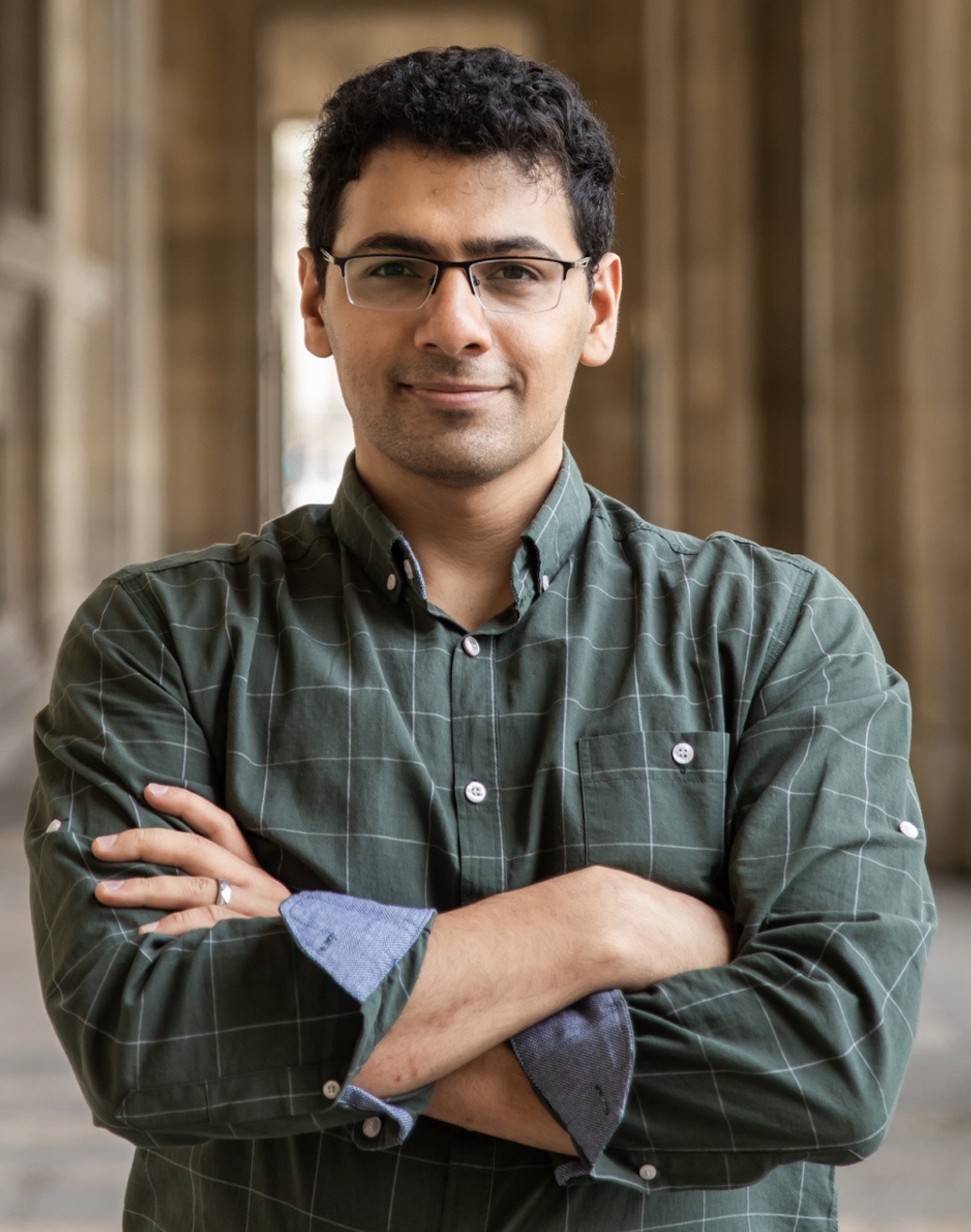
Amir H. Karimi
Assistant Professor
O'Donovan Chair in Trustworthy AI
Electrical & Computer Engineering, University of Waterloo
Cheriton School of Computer Science (cross-appointment)
Faculty Affiliate, Vector Institute
amirh.karimi [at] uwaterloo.ca
Bio
Dr. Amir-Hossein Karimi is an award-winning researcher and educator, and an Assistant Professor in the Department of Electrical and Computer Engineering and the Cheriton School of Computer Science (cross-appointed) at the University of Waterloo, and a Vector Institute Faculty Affiliate.
He leads the Collaborative Human-AI Reasoning Machines (✨CHARM✨) Lab, dedicated to advancing safe and trustworthy human-AI collaborations.
Prior to joining Waterloo, Dr. Karimi accumulated over 15 years of experience in leading technology and research roles at
BlackBerry (2013),
Meta (Facebook) (2014–2016),
Google Brain (2021),
and Google DeepMind (2022),
and has consulted for startups and incubators including
NEXT AI.
His contributions have earned him multiple accolades, such as the UofToronto Spirit of Engineering Science Award (2015), the UWaterloo Alumni Gold Medal Award (2018), the NSERC Canada Graduate Scholarship - Doctorate (2018), the Google PhD Fellowship (2021), the ETH Zurich Medal (2024), the NSERC Discovery Grants & Supplements (2024), the Igor Ivkovic Teaching Excellence Award (2024), and the the O'Donovan Chair in Trustworthy AI (2025). To view the full CV, click here.
✨CHARM Lab✨ 👈🏼 click me
As AI systems become increasingly embedded in high-stakes domains such as healthcare, education, finance, and transportation, ensuring their reliability, transparency, and adaptability is critical.
The vision of the Collaborative Human-AI Reasoning Machines (✨CHARM✨) Lab is to enable trustworthy human-AI ecosystems, where AI systems can be understood, influenced, and improved over time.
Our mission is to develop principled methods for trustworthy human-AI systems with three core capabilities:
- Understand — Reveal how AI systems represent, reason, and make decisions.
- Intervene — Enable people to question, contest, correct, and redirect AI decisions.
- Evolve — Build human-AI ecosystems that learn from feedback, adapt over time, and improve collective outcomes.
Our work draws on tools from causal reasoning, explainable AI, neuro-symbolic learning, and human-AI interaction, and spans disciplines including cognitive science, social sciences, and multi-agent systems.
Prospective Students
The lab is always on the lookout for exceptional and highly motivated students/visitors across all levels (bachelor's, master's, doctoral, postdoctoral). Our research sits at the intersection of theory and practice, focusing on foundational questions motivated by real-world impact. If this direction resonates with your interests and background in machine learning, computer science, or related fields, please fill out fill out this form.
Research
Dr. Karimi's scholarly contributions have been showcased almost exclusively at top-tier AI and ML venues including NeurIPS, ICML, AAAI, AISTATS, ACM FAccT, and ACM AIES. He has authored influential publications such as a comprehensive survey paper in the prestigious ACM Computing Surveys and Trends in Cognitive Sciences, holds a patent, and is a contributing author of a book chapter. Dr. Karimi’s work on algorithmic recourse has notably elevated its prominence in responsible AI research, with its presence growing from almost none to hundreds on Google Scholar in just five years; algorithmic recourse is now a mandatory criterion in key sectors, including Canada’s Treasury Board Directive on Automated Decision-Making. Several of Dr. Karimi's papers have received over 100 citations each. Dedicated to knowledge mobilization and reproducibility, his open-source code has garnered over 100 GitHub stars. To learn more about algorithmic recourse, visit this website.
🏛️ NeurIPS Workshop on Beyond Next Token Prediction
🏛️ arXiv preprint arXiv:2606.16113
✨ TL;DR: RecourseBench provides a modular, reproducible, and interactive benchmark for evaluating algorithmic recourse methods
🏛️ NeurIPS 2026
✨ TL;DR: A perturbation framework for auditing and stress-testing the robustness of pairwise-comparison leaderboards
🏛️ EurIPS Theory of XAI Workshop, 2025
✨ TL;DR: Solving XAI requires us to make explicit our causal assumptions of the world
🏛️ ACM FAccT 2026
✨ TL;DR: Providing recourse to any one individual affects what recourse can be provided to other individuals
🏛️ Trends in Cognitive Sciences (impact factor: 17.2)
✨ TL;DR: AI systems should integrate metacognitive strategies to enhance robustness, explainability, cooperation, and safety in complex real-world scenarios
🏛️ Nature Scientific Reports (impact factor: 3.9)
✨ TL;DR: TCFormer leverages CNNs, transformers, and temporal convolutions to decode EEG motor imagery, significantly outperforming existing BCI approaches
🏛️ ICML 2023 (acceptance rate: 27.9%)
✨ TL;DR: do explanations actually explain the predictions? yes, among other things....
🏛️ ACM Computing Surveys 2022 (impact factor: 24.0)
✨ TL;DR: definitions, formulations, solutions, and prospects for recourse research
🏛️ EMNLP 2016 (acceptance rate: 24.3%)
✨ TL;DR: use key-value pairs to efficiently retrieve and store information for improved document comprehension
🏛️ NeurIPS Workshop on Beyond Next Token Prediction
🏛️ NeurIPS 2026
✨ TL;DR: A perturbation framework for auditing and stress-testing the robustness of pairwise-comparison leaderboards
🏛️ arXiv preprint arXiv:2602.24176
✨ TL;DR: a cross-disciplinary research agenda for moving beyond current explainable AI paradigms toward post-XAI directions
🏛️ COLM 2026
🏛️ EurIPS Theory of XAI Workshop, 2025
✨ TL;DR: Solving XAI requires us to make explicit our causal assumptions of the world
🏛️ ICML 2024 (acceptance rate: 27.5%)
🏛️ ICML 2023 (acceptance rate: 27.9%)
✨ TL;DR: do explanations actually explain the predictions? yes, among other things....
🏛️ ICML 2023 (acceptance rate: 27.9%)
🏛️ IJCNN 2018 (acceptance rate: 22.7%)
🏛️ arXiv
🏛️ CVIS 2017 (acceptance rate: 40.0%)
🏛️ EMNLP 2016 (acceptance rate: 24.3%)
✨ TL;DR: use key-value pairs to efficiently retrieve and store information for improved document comprehension
🏛️ ICIP 2016 (acceptance rate: 40.0%)
🏛️ arXiv preprint arXiv:2606.16113
✨ TL;DR: RecourseBench provides a modular, reproducible, and interactive benchmark for evaluating algorithmic recourse methods
🏛️ ACM FAccT 2026
✨ TL;DR: Providing recourse to any one individual affects what recourse can be provided to other individuals
🏛️ AAAI 2023 (acceptance rate: 23.7%)
🏛️ ACM FAccT 2023 (acceptance rate: 24.6%)
✨ TL;DR: as the title says...
🏛️ ICML 2022 (acceptance rate: 21.9%)
✨ TL;DR: robustness of recourse is separate from robustness of prediction
🏛️ AAAI 2022 (acceptance rate: 15.0%)
✨ TL;DR: fairness of recourse is separate from fairness of prediction
🏛️ ACM Computing Surveys 2022 (impact factor: 24.0)
✨ TL;DR: definitions, formulations, solutions, and prospects for recourse research
🏛️ NeurIPS 2020 (acceptance rate: 20.1%)
✨ TL;DR: causal assumptions are rarely available; instead generate recourse probabilistically
🏛️ ACM FAccT 2021 (acceptance rate: 25.0%)
✨ TL;DR: real-world causal assumptions are needed for counterfactual explanations & recourse
🏛️ ACM AIES 2021 (acceptance rate: 38.0%)
✨ TL;DR: generate optimal counterfactual explanations using mixed-integer linear programs
🏛️ AISTATS 2019 (acceptance rate: 32.4%)
✨ TL;DR: generate optimal counterfactual explanations using satisfiability solvers
🏛️ arXiv preprint arXiv:2605.23981
✨ TL;DR: Metacognition offers a framework for bounded and effective self-governance in generative AI systems
🏛️ Trends in Cognitive Sciences (impact factor: 17.2)
✨ TL;DR: AI systems should integrate metacognitive strategies to enhance robustness, explainability, cooperation, and safety in complex real-world scenarios
🏛️ Nature Scientific Reports (impact factor: 3.9)
✨ TL;DR: TCFormer leverages CNNs, transformers, and temporal convolutions to decode EEG motor imagery, significantly outperforming existing BCI approaches
🏛️ CVIS 2018 (acceptance rate: 40.0%)
🏛️ CCN 2017 (acceptance rate: 40.0%)
🏛️ ICIAR 2017 (acceptance rate: 40.0%)
🏛️ Biomedical Optics Express (impact factor: 2.9)
🏛️ arXiv preprint arXiv:2602.24176
✨ TL;DR: a cross-disciplinary research agenda for moving beyond current explainable AI paradigms toward post-XAI directions
🏛️ EurIPS Theory of XAI Workshop, 2025
✨ TL;DR: Solving XAI requires us to make explicit our causal assumptions of the world
🏛️ ICML 2024 (acceptance rate: 27.5%)
🏛️ ICML 2023 (acceptance rate: 27.9%)
✨ TL;DR: do explanations actually explain the predictions? yes, among other things....
🏛️ ACM AIES 2021 (acceptance rate: 38.0%)
✨ TL;DR: generate optimal counterfactual explanations using mixed-integer linear programs
🏛️ AISTATS 2019 (acceptance rate: 32.4%)
✨ TL;DR: generate optimal counterfactual explanations using satisfiability solvers
🏛️ arXiv preprint arXiv:2606.16113
✨ TL;DR: RecourseBench provides a modular, reproducible, and interactive benchmark for evaluating algorithmic recourse methods
🏛️ ACM FAccT 2026
✨ TL;DR: Providing recourse to any one individual affects what recourse can be provided to other individuals
🏛️ ACM FAccT 2023 (acceptance rate: 24.6%)
✨ TL;DR: as the title says...
🏛️ ICML 2022 (acceptance rate: 21.9%)
✨ TL;DR: robustness of recourse is separate from robustness of prediction
🏛️ AAAI 2022 (acceptance rate: 15.0%)
✨ TL;DR: fairness of recourse is separate from fairness of prediction
🏛️ ACM Computing Surveys 2022 (impact factor: 24.0)
✨ TL;DR: definitions, formulations, solutions, and prospects for recourse research
🏛️ NeurIPS 2020 (acceptance rate: 20.1%)
✨ TL;DR: causal assumptions are rarely available; instead generate recourse probabilistically
🏛️ ACM FAccT 2021 (acceptance rate: 25.0%)
✨ TL;DR: real-world causal assumptions are needed for counterfactual explanations & recourse
🏛️ ACM AIES 2021 (acceptance rate: 38.0%)
✨ TL;DR: generate optimal counterfactual explanations using mixed-integer linear programs
🏛️ AISTATS 2019 (acceptance rate: 32.4%)
✨ TL;DR: generate optimal counterfactual explanations using satisfiability solvers
🏛️ EurIPS Theory of XAI Workshop, 2025
✨ TL;DR: Solving XAI requires us to make explicit our causal assumptions of the world
🏛️ AAAI 2023 (acceptance rate: 23.7%)
🏛️ ICML 2023 (acceptance rate: 27.9%)
✨ TL;DR: do explanations actually explain the predictions? yes, among other things....
🏛️ ICML 2023 (acceptance rate: 27.9%)
🏛️ ACM FAccT 2023 (acceptance rate: 24.6%)
✨ TL;DR: as the title says...
🏛️ ICML 2022 (acceptance rate: 21.9%)
✨ TL;DR: robustness of recourse is separate from robustness of prediction
🏛️ AAAI 2022 (acceptance rate: 15.0%)
✨ TL;DR: fairness of recourse is separate from fairness of prediction
🏛️ ACM Computing Surveys 2022 (impact factor: 24.0)
✨ TL;DR: definitions, formulations, solutions, and prospects for recourse research
🏛️ NeurIPS 2020 (acceptance rate: 20.1%)
✨ TL;DR: causal assumptions are rarely available; instead generate recourse probabilistically
🏛️ ACM FAccT 2021 (acceptance rate: 25.0%)
✨ TL;DR: real-world causal assumptions are needed for counterfactual explanations & recourse
🏛️ arXiv preprint arXiv:2605.23981
✨ TL;DR: Metacognition offers a framework for bounded and effective self-governance in generative AI systems
🏛️ Trends in Cognitive Sciences (impact factor: 17.2)
✨ TL;DR: AI systems should integrate metacognitive strategies to enhance robustness, explainability, cooperation, and safety in complex real-world scenarios
🏛️ arXiv preprint arXiv:2606.16113
✨ TL;DR: RecourseBench provides a modular, reproducible, and interactive benchmark for evaluating algorithmic recourse methods
🏛️ NeurIPS 2026
✨ TL;DR: A perturbation framework for auditing and stress-testing the robustness of pairwise-comparison leaderboards
🏛️ Nature Scientific Reports (impact factor: 3.9)
✨ TL;DR: TCFormer leverages CNNs, transformers, and temporal convolutions to decode EEG motor imagery, significantly outperforming existing BCI approaches
🏛️ CVIS 2018 (acceptance rate: 40.0%)
🏛️ ICIAR 2017 (acceptance rate: 40.0%)
🏛️ Biomedical Optics Express (impact factor: 2.9)
🏛️ arXiv
🏛️ CVIS 2017 (acceptance rate: 40.0%)
🏛️ CCN 2017 (acceptance rate: 40.0%)
🏛️ NeurIPS Workshop on Beyond Next Token Prediction
🏛️ COLM 2026
🏛️ IJCNN 2018 (acceptance rate: 22.7%)
🏛️ EMNLP 2016 (acceptance rate: 24.3%)
✨ TL;DR: use key-value pairs to efficiently retrieve and store information for improved document comprehension
🏛️ ICIP 2016 (acceptance rate: 40.0%)
People
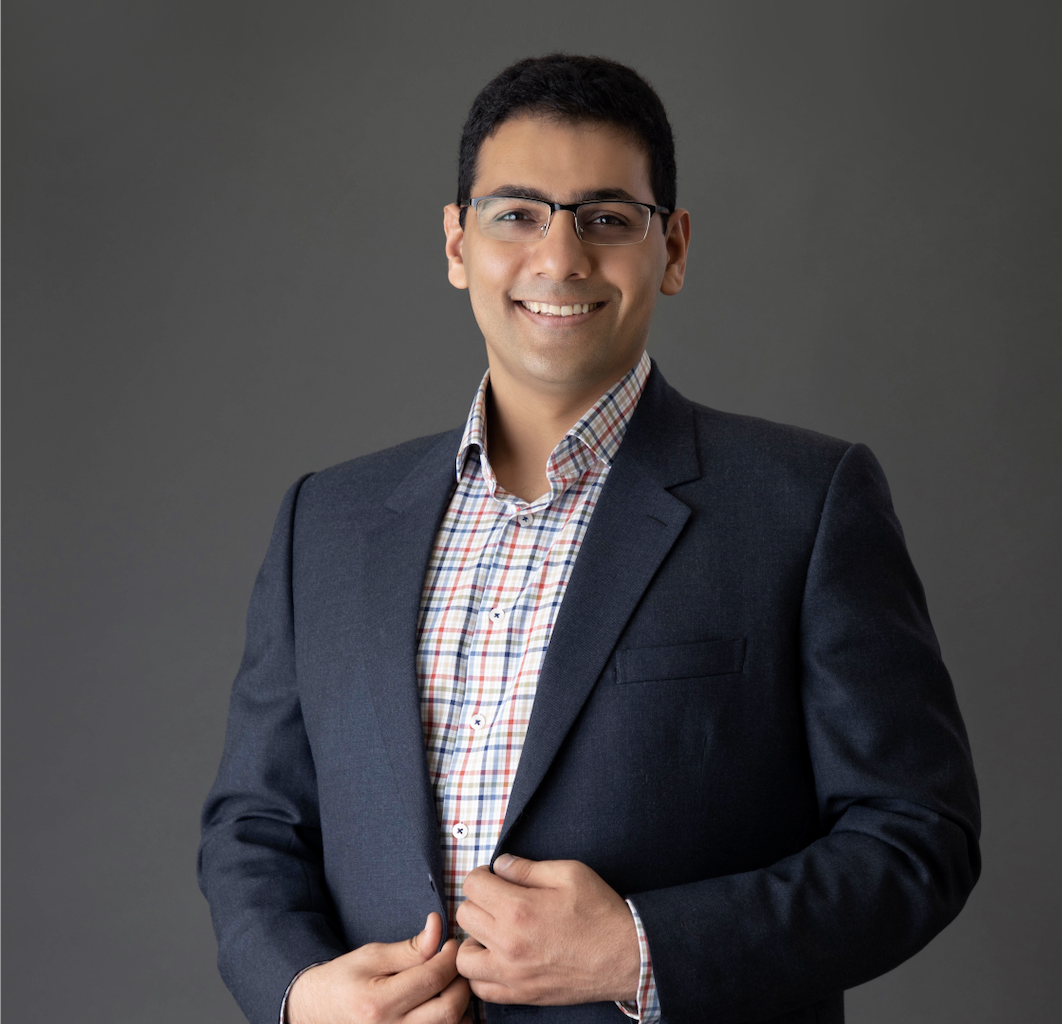
Amir-Hossein Karimi
Principal Investigator (PI)

Ahmed Abdelaal
PhD Student
Hashir Ahmed
Master's Student
Chenghao Tan
Master's Student
Boyu Jiang
Master's Student

Anna Li
Undergraduate Student
Tom Wielemaker
Undergraduate Student
Hamza Mostafa
Undergraduate Student
(next: OpenAI Inc.)
Ali Al Hamadani
Undergraduate Student
Farshad Khunjush
Visiting Professor
Mohammad Hadi Sepanj
Postdoctoral Fellow
Zahra Khotanlou
Master's Student
Dongzhuyuan Lu
Master's Student
Jieming Yu
Master's Student
Chidilim Ejeh
Master's Student
Parsa Ghiasian
Undergraduate Student
Xianda Du
Undergraduate Student
Abubakar Bello
Undergraduate Student
(next: Microsoft Inc.)
Mohammadreza Alavi
Undergraduate Student
Teaching



Press, Funding, & Consultations
Dr. Karimi is grateful for the generous funding support from the University of Waterloo, NSERC, CIFAR, Google, Waterloo.AI, and the O'Donovan Family, enabling his team to push the boundaries of human-AI research.
Besides academic contributions, Dr. Karimi also consults internationally for several startups, leveraging his expertise for discovery, product-market fit, and scaling of operations, in addition to fundraising and grant writing. He is available to discuss how his research and experience can deliver value to your organization and stakeholders. To book a time, click this link.
For press inquiries, feel free to reach out via email.